During the past fiscal year (April 1, 2025 to March 31, 2026), Cardiac Services BC continued to work alongside our health system partners to provide high quality cardiac procedures and services to people living in British Columbia (BC).
As we look back on the past year, we share highlights of the work we accomplished together, across the five strategic aims that guide our work:
-
Optimizing access for patients
-
Advancing quality of care
-
Creating value through data
-
Strengthening networks through partnership and stewardship
-
Advancing through purposeful engagement
Cardiac system planning supports access to services and helps improve how care is delivered across BC. We bring together health data and input from regional health authorities to inform decisions about how services are organized and delivered provincially.
Over the past year, our focus was on improving wait-list information for acute cardiac procedures (cardiac catheterization services, cardiac surgery, transcatheter heart valves, heart rhythm devices and electrophysiology), strengthening long-term planning and advancing strategic initiatives.
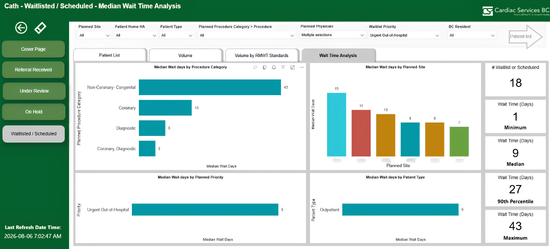 Pictured: An example of a filtered catheterization wait-list data dashboard search using Cardiac Services BC's provincial cardiac data system (CVI.Source).
Key achievements include:
Standardizing wait-list management across BC
Implementing a new Referral and Waitlist Management Policy for Cardiac Procedural Services and onboarding health authority staff to standardize how each region receives referrals and tracks their wait-lists for cardiac procedures.
The new policy was created to:
- Improve procedural wait-list management
- Ensure consistency in practice across the province
- Improve relevant referral, assessment and wait-list data collection
- Optimize access to cardiac procedural services for patients in British Columbia
- Ensure the accuracy of patient wait-lists and wait time data
Planning for future demand
Creating a cardiac service demand model that integrates provincial cardiac service utilization data with BC population projections to forecast how many cardiac procedures and services will be needed over the next 20 years. The model will serve as a strategic planning tool for both provincial and regional decision-making by identifying emerging demand trends, informing capacity requirements, and highlighting potential gaps between projected service needs and planned resources.
Supporting regional engagements to complete system-wide cardiovascular planning including the Island Health Cardiac Clinical Services Planning project by providing and validating health utilization data and participation in planning workshops.
Supporting expansion of cardiac services
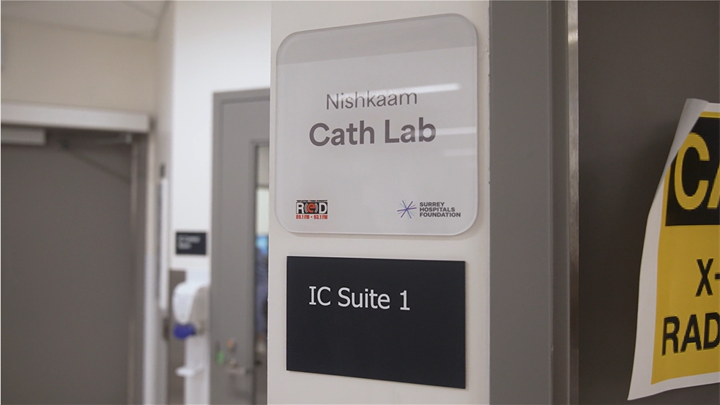

Photo credit: Fraser Health
Photo credit: Northern Health
Cardiac Services BC monitors system performance and uses provincial cardiac data and analytics to support quality improvement and inform decision making across BC. This work supports research, and education by evaluating and reporting outcomes, and translating evidence into practice.
This year, our achievements include:
Strengthening performance monitoring
Developing and launching a new user-friendly provincial quality dashboard to enable each region’s medical leadership to monitor their cardiac system performance and review detailed, case-level outcomes, such as mortality, readmissions and repeat procedures. This dashboard provides rapid access to local data and is being implemented into quality improvement processes within each region.
Improving heart failure education and care resources
- Developed a four-part toolkit to support BC healthcare providers with safe and timely prescribing of medications for heart failure with reduced ejection fraction (HFrEF). It includes a patient and caregiver handout developed in collaboration with HeartLife Foundation and translated into eight languages.
- Our clinical leads provided education sessions to over 130 BC health care providers about how to use the toolkit in their practice.
- Published an eight-part video series for patients and caregivers on key topics to support living well with heart failure. These videos were created in partnership with regional health authorities, PHSA Indigenous Health, First Nations Health Authority and Métis Nation BC.
- Together, these eight videos have received 7,300 total views since publication.
Expanding access to heart failure therapies
Successfully advocating for improved access to heart failure medications by partnering with BC Pharmacare to increase the types of providers who can prescribe these medications.
Completing CSBC's first annual Research Fellowship, which focused on future modelling of pharmacist- or nurse practitioner- led medication management for people living with heart failure. Funded by the Canadian Institute of Health Research Health System Impact Fellowship with support from Health Research BC, this work will inform future care delivery models and human health resource planning required to support guideline-based care in BC.
Enhancing cardiovascular data infrastructure and patient safety
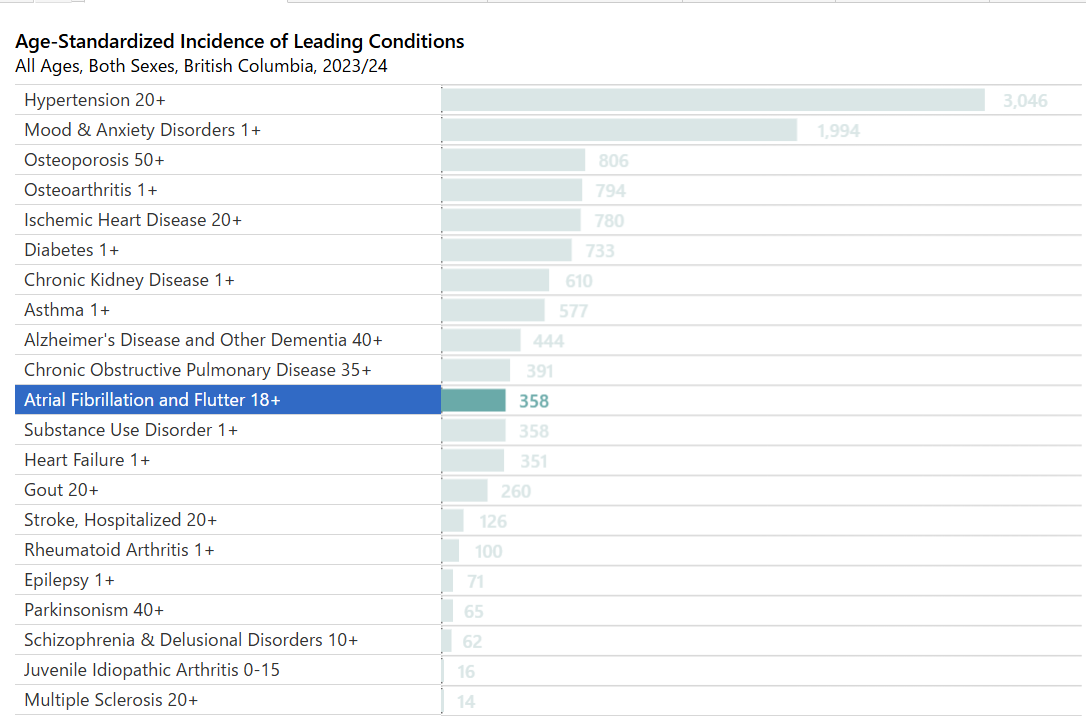
- Partnering with the Office of the Provincial Health Officer and the Ministry of Health in the development of an Atrial Fibrillation Chronic Disease registry. This addition, along with existing Coronary Artery Disease and Heart Failure registries, to the BC Chronic Disease Dashboard will enable Cardiac Services BC, clinical leaders and researchers to understand trends in disease and enable data informed health care planning.
- Launching a new webpage to offer a centralized summary of our practitioner resources for ongoing heart rhythm device advisories and recalls that affect patients in BC. When Health Canada issues a heart rhythm device advisory or recall, we provide support in the identification of impacted patients, establish a provincial patient management pathway to ensure consistent care, and provide materials to support physicians with communicating advisory or recall information — and next steps — to patients, families and caregivers.
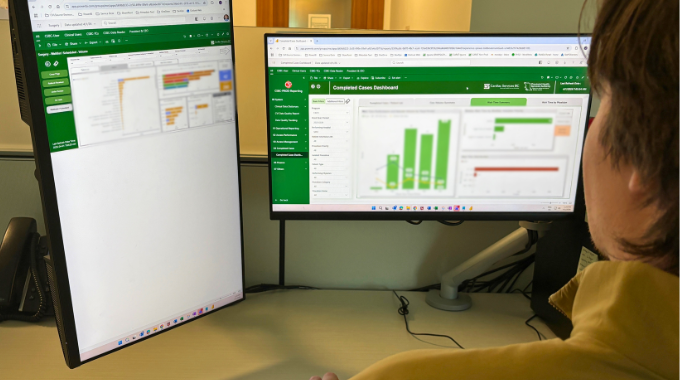
The provincial cardiac data system (CVI.Source) is a module on PRISM (Provincial Registries Information SysteM), which is a software platform developed by Cardiac Services BC to replace its legacy HeartIS system. CVI.Source supports direct delivery of care via its active waitlisting tools to support a provincial waitlist, triage and transfer for cardiac patients, the CARAT tool (providing visual documentation of procedures for both patients and providers), and standardized operative reports across all health authorities. It also enables consistent reporting across regional cardiac program sites, helps track system performance and provides a longitudinal registry of data from 1990 to present to guide quality improvement, planning, decision making and research.
- Our registry data was used in five research publications this year.
- CVI.Source underwent key updates to keep up with changing technologies and services and improve usability for health authority staff, including:
- Clearer required fields, smoother navigation between features, and instant patient launch within Cerner/Meditech to help registry users work more efficiently
- Data integrations to reduce duplicate data entry for clinical staff
- Adding advanced reporting tools that allow teams to clearly search, view and summarize information for planning, monitoring or making decisions about services
- Implementing cybersecurity enhancements
Cardiac Services BC funds cardiac services and procedures, forecasts the number of procedures to be completed each year and develops business cases for capital planning, new program expansion, and the introduction of new technologies at each site. We also support strategic planning, procurement and risk management in collaboration with regional health authorities.
In 2025/26, this work improved transparency in how cardiac services are funded and supported across the province — strengthening our partnerships with health authorities and enabling more consistent and proactive financial planning.
Key achievements include:
- Securing three five-year provincial pricing agreements with industry partners for:
- electrophysiology supplies and equipment
- heart rhythm devices
- transcatheter heart valves
- Improving funding transparency by introducing a monthly funding reconciliation process, enhancing mid-year forecasts to reflect year-end totals (within 1-5%) and creating a shared finance dashboard for regional and provincial partners.
- Aligning funding more closely with actual hospital costs by updating clinical program rates through procurement and incorporating changes into regional funding agreements.
- Providing analysis and updates on the current, provincial cardiac services budget, as well as provincial procurement contracts and processes, to the CSBC Provincial Executive Council to support health authority budgeting.
Cardiac Services BC relies on collaboration and connection with regional health authority medical and operational leadership, clinicians, academic researchers, and people with lived experience to share and prioritize current issues and needs in cardiac care for action. We connect with local and provincial expertise through
four population groups who provide expert advice and experience to our shared work.
This year, we welcomed new medical chairs of our four population groups:
Heart Rhythm Population Group Medical Chair
Dr. John Paul Lemaitre, Cardiologist and Electrophysiologist, Regional Division Head Cardiology, Fraser Health
Thank you to our previous Medical Chair, Dr. Jason Andrade, Cardiac Electrophysiologist, Director, Electrophysiology, Vancouver Coastal Health
Coronary Artery Disease Population Group Medical Chair:
Dr. Christopher Franco, Cardiologist, Division Head, Cardiology, Medical Director, Cardiac Services, Vancouver Island
Thank you to our previous Medical Chair, Dr. Graham Wong, Director, Vancouver General Hospital Cardiac Intensive Care Unit
- Heart Failure and Chronic Cardiovascular Disease Population Group Medical Chair
Dr. Michael Diamant, Advanced Heart Failure Cardiologist and Heart Function Clinic Physician Lead, Royal Columbian Hospital
Thank you to our previous Medical Chair, Dr. Elizabeth Swiggum, Medical Director, Heart Function Clinic and Cardiac Rehab Program, Royal Jubilee Hospital
- Aortic and Structural Cardiac Disease Population Group Medical Chair
Dr. Joel Price, Cardiac Surgeon, Director for Thoracic Aortic Disease, Vancouver Coastal Health
We appreciate the partners who worked alongside us this year:
- Fraser Health
- Interior Health
- Island Health
- Northern Health
- Providence Health Care
- Vancouver Coastal Health
- First Nations Health Authority
- Métis Nation BC
- HeartLife Foundation
- Heart and Stroke Foundation
- University of British Columbia
Through shared purpose and strong collaboration, we continue to make meaningful progress towards providing better care for people with cardiac conditions in BC.
Stay connected
To learn more about Cardiac Services BC and our work: